CAVS at MIT
The Center for Advanced Visual Studies (CAVS) at MIT
The Center for Advanced Visual Studies (CAVS) was founded at the Massachusetts Institute of Technology in 1967 by Professor György Kepes to bring artists from around the world to collaborate with MIT’s community of scientists and engineers, to produce works using new directions in technological approaches that would rise to interaction with the broader community at the urban or civic scale.
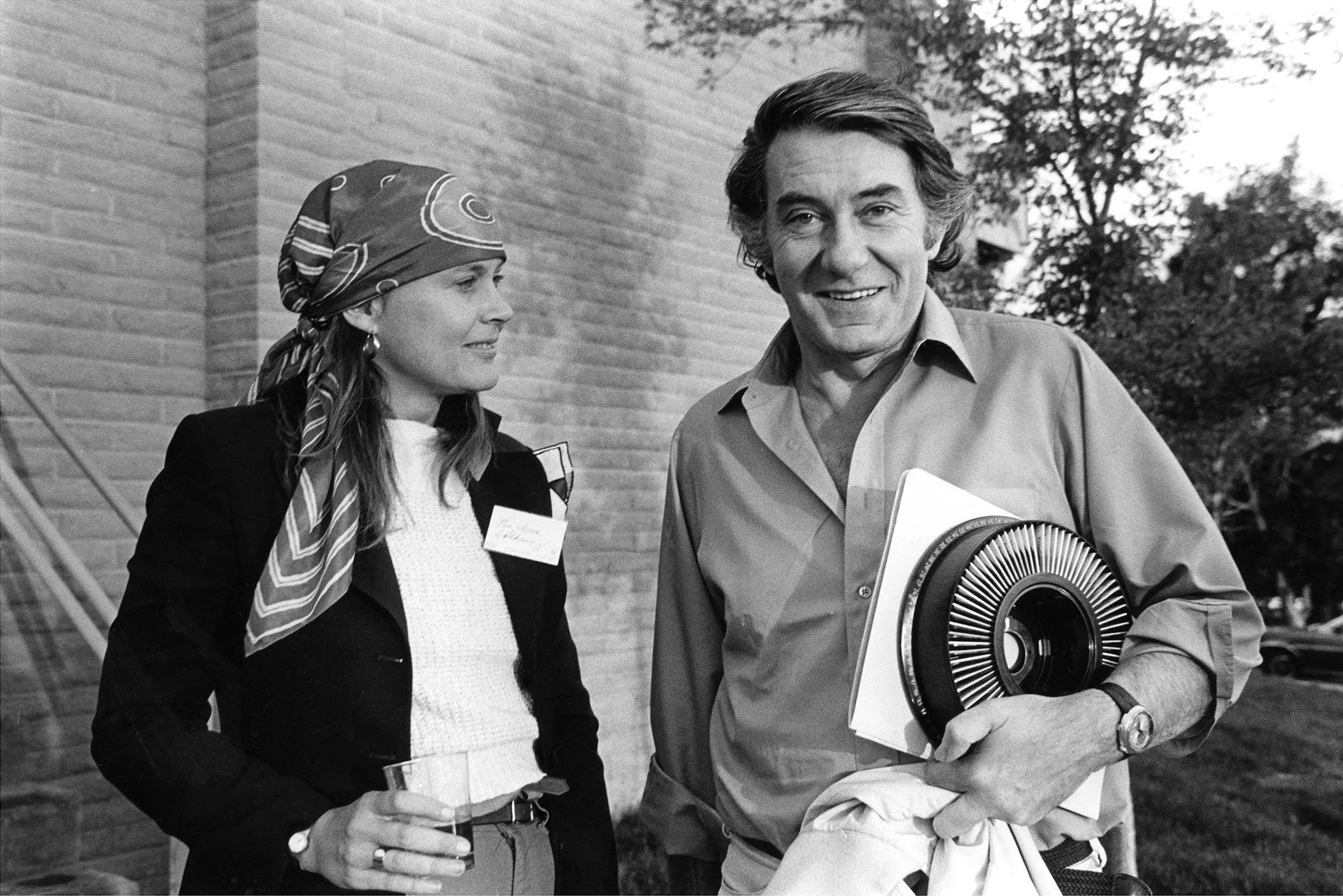
Otto Piene was the first international Fellow appointed to CAVS (pronounced C. A. V. S.) in 1968. He became the second Director of CAVS in 1974 until retiring in 1993. Elizabeth Goldring was the CAVS Exhibits and Project Director and the interim Co-Director of CAVS.
One overarching goal was the worship of light as the element that keeps us all alive and together. And of course the element of human freedom—freedom of thought and freedom of values and freedom of ideas and ideals. The spirit of CAVS was that people found each other and believed in progress in friendship, sympathy that grew out of working together, and knowledge. Skills were shared and were transported and proliferated by people together. This actually happened to me before the Center, before MIT, and before the institutes that developed in Germany that were modeled after the Center, like ZKM. There was a new spirit of artists, in the art that is practiced within art, science, technology realms, that were earlier maybe wished for by some people—Kepes was one of them—people who wished for a unification of the efforts of artists, scientists, and engineers. The spirit of that already existed for me and some of my closest friends earlier in Europe. The main force was the voluntary collaboration among people. People indeed didn’t work by force or outside powers; they worked because they wanted to reach new shores.
— Otto Piene, March 3, 2012, from interview with Bill Seaman (CAVS alumni; Professor of Visual Studies, Duke University)

The home of CAVS, MIT building W11, at 40 Massachusetts Ave., Cambridge, MA. Photo: Nishan Bichanjian

Otto Piene "Lift and Equilibrium" sky art event, July 25, 1969, on Briggs Field at MIT, with his descriptive text, from Piene's Sky Art Portfolio prints. Photo: Bob Lyon

Elizabeth Goldring uses the Scanning Laser Ophthalmoscope (SLO) to view images projected on to her retina of her Visual Language for the Blind.

Books from György Kepes' Vision and Value series, displayed at the MIT Museum. photo: Samara Vise
SKY ART
Sky art has emerged as ‘flying messages’, migrant apparitions and temporary artwork appearing in the urban sky space between our buildings, above our heads-colors by day, lights by night- traveling from deep inside ourselves to the invisible tips of invisible stars, art in orbit.
In 1969, Otto Piene coined the term ‘sky art’, using it in three places: in his Sky Art Portfolio, a suite of 25 lithographs of imaginary and future sky art projects; in his book More Sky; and in his article ‘Sky Art: A Notebook for a Book’, a discussion of past and future sky projects.
— Elizabeth Goldring, “Desert Sun/Desert Moon and the SKY ART Manifesto,” Leonardo, Vol. 20, Number 4, October 1987, 339-348